The Fascinating World of Cat Behavior
Posted on August 7, 2025 by Furry Paw Gifts
Understanding Your Feline Friend's Quirky Ways
Cats have been captivating humans for thousands of years with their mysterious personalities and endearing quirks. From the regal Maine Coon to the chatty Siamese, each cat brings their own unique blend of behaviors that can both delight and perplex their human companions. Understanding why cats do what they do not only strengthens the bond between you and your feline friend but also helps create a more enriching environment for both of you.
The Independent Spirits with Hidden Depths
Unlike their canine counterparts, cats have retained much of their wild ancestry, which explains their reputation for independence. This self-reliant nature stems from their evolutionary background as solitary hunters. In the wild, cats needed to be resourceful and cautious to survive, traits that persist in our domestic companions today.
However, this independence doesn't mean cats are antisocial. They form complex social hierarchies and can develop deep bonds with their human families. Many cat owners are surprised to discover that their seemingly aloof feline actually craves routine and becomes distressed when their daily patterns are disrupted. This contradiction between independence and attachment is part of what makes cats so endlessly fascinating.
The Language of Purrs, Chirps, and Silent Meows
Cat communication extends far beyond the simple meow. Adult cats primarily developed meowing as a way to communicate with humans rather than other cats. In fact, many cats reserve their most elaborate vocalizations for their human companions, treating us almost like permanent kittens who need extra guidance.
The famous purr serves multiple purposes beyond expressing contentment. Cats purr when they're happy, yes, but also when they're nervous, in pain, or even when giving birth. The vibrations from purring actually promote healing by stimulating bone growth and reducing pain. It's like having a built-in therapy machine that also happens to be incredibly soothing to humans.
Then there are the chirps and trills that some cats use, particularly when greeting their favorite humans or spotting birds outside the window. These sounds are remnants of the vocalizations mother cats use to communicate with their kittens, suggesting that your cat might see you as family in the most literal sense.
The Art of Feline Play: More Than Just Fun and Games
Play behavior in cats serves crucial developmental and psychological purposes. Kittens learn essential hunting skills through play, practicing the stalk-chase-pounce-kill sequence that their ancestors perfected over millennia. Even adult cats retain this play drive, which is why a simple feather wand can transform your dignified house cat into a fierce predator.
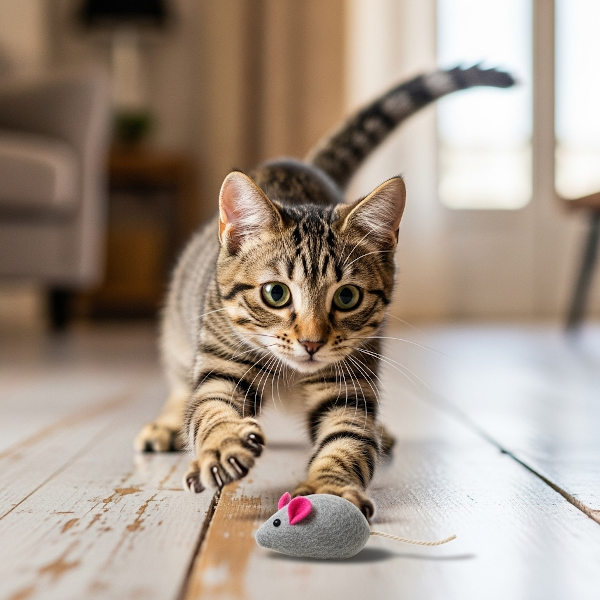
Different types of play serve different functions. Solo play with small objects like toy mice helps cats practice their catching and killing techniques. Interactive play with humans or other cats develops social skills and provides crucial mental stimulation. Many behavioral problems in indoor cats stem from insufficient play opportunities, leading to frustrated hunting instincts that may manifest as aggression or destructive behavior.
The timing of play is also significant. Cats are naturally most active during dawn and dusk, periods known as crepuscular activity. This explains why your cat might suddenly get the "zoomies" just as you're settling in for the evening or why they might wake you up with playful antics in the early morning hours.
Territory and the Sacred Spaces
Cats are intensely territorial creatures, but their concept of territory is more complex than simply claiming ownership of a space. They create detailed mental maps of their environment, marking important locations with scent from specialized glands in their cheeks, paws, and other areas of their body.
This territorial nature explains many seemingly odd behaviors. That cardboard box that appeared yesterday? It needs to be thoroughly investigated and claimed. The warm spot where sunlight streams through the window? Prime real estate that must be defended. Even the way cats rub against your legs serves a dual purpose: they're both showing affection and marking you as part of their territory.
Understanding this territorial mindset helps explain why cats can be so particular about changes in their environment. Moving furniture, introducing new pets, or even changing your own routine can cause stress because it disrupts their carefully mapped world.
The Midnight Hunters: Understanding Nocturnal Behaviors
Many cat behaviors that seem problematic to humans actually make perfect sense when viewed through the lens of their wild heritage. The midnight racing around the house, formally known as Feline Hyperesthesia Syndrome or more commonly as the "zoomies," mimics the burst of energy wild cats would use for hunting.
Similarly, the 3 AM wake-up calls often result from cats following their natural circadian rhythms. In the wild, these dawn and dusk periods offer the best hunting opportunities when small prey animals are most active. Your indoor cat may not need to hunt for survival, but the instinct remains strong.
Social Butterflies in Disguise
Despite their reputation for aloofness, many cats are surprisingly social creatures. They form complex relationships not just with humans but with other cats in multi-cat households. Some cats become bonded pairs, grooming each other, sleeping together, and even seeming to grieve when separated.
The social structure in cat colonies is fluid and based more on resource availability and individual personality than strict dominance hierarchies. This flexibility has allowed cats to adapt so successfully to living with humans, essentially treating us as part of their social group while maintaining their independence.
Creating the Perfect Environment for Your Unique Cat
Understanding these natural behaviors helps us create environments where cats can express their instincts in appropriate ways. Providing vertical spaces satisfies their need to survey territory from high vantages. Interactive toys address hunting instincts. Multiple resources (food bowls, water sources, litter boxes) scattered throughout the home respect their territorial nature and reduce stress in multi-cat households.
Every cat is an individual with their own personality quirks, preferences, and needs. Some cats are natural comedians who seem to take joy in making their humans laugh. Others are dignified creatures who prefer quiet companionship. Some are social butterflies who greet every visitor, while others are more selective with their affections.
The key to living harmoniously with cats lies in observing and respecting their individual personalities while providing outlets for their natural behaviors. When we understand that the cat knocking items off the counter might be expressing hunting behaviors or seeking attention, we can redirect that energy into more appropriate activities.
Cats continue to surprise researchers and pet owners alike with the depth of their emotional lives and the complexity of their behaviors. As we learn more about feline psychology and cognition, we discover that these seemingly simple creatures are actually sophisticated beings with rich inner lives, individual preferences, and the capacity for deep bonds with their human companions.
The next time your cat exhibits a puzzling behavior, remember that there's likely a fascinating evolutionary or psychological explanation behind it. Whether they're chattering at birds, claiming your keyboard as their personal throne, or presenting you with a "gift" at 2 AM, your feline friend is simply being authentically, wonderfully cat-like – and that's exactly what makes them so special.
