Age Is Just A Number
Posted on August 29, 2025 by Furry Paw Gifts
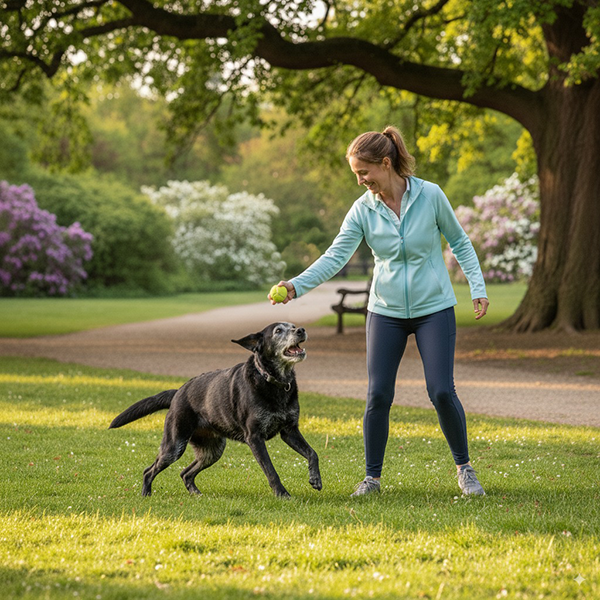
Why You Absolutely Can Teach an Old Dog New Tricks
For generations, the old saying "you can't teach an old dog new tricks" has been accepted as common knowledge. But what if we told you that this widely held belief is nothing more than a myth? Modern science and countless heartwarming stories from dog owners around the world are here to prove that not only can you teach an older dog new tricks, but you absolutely should.
Recent studies in canine cognition have revealed that dogs, much like humans, possess neuroplasticity – the brain's remarkable ability to form new neural connections throughout life. This means that your senior dog's brain is still perfectly capable of processing and retaining new information, making learning a lifelong possibility.
More Than Just a Trick: The Myriad Benefits of Lifelong Learning
Training your senior dog is about so much more than just showing off a new party trick. The benefits extend to their physical health, mental well-being, and the special bond you share.
Keeping Their Mind Sharp: Just like puzzles and reading can help keep our minds active as we age, learning new skills provides crucial mental stimulation for our canine companions. Engaging their brain with training can help prevent cognitive decline and conditions similar to dementia in humans. This mental exercise keeps them alert, engaged, and can even give them a renewed sense of purpose.
Gentle Exercise and Improved Mobility: As dogs get older, they naturally slow down. Training can be a wonderful way to encourage gentle movement and maintain their physical health. Tricks that involve stretching, like a "bow," can be a great way for your dog to do their own version of yoga. Even simple commands that encourage a little movement can help with mobility and overall fitness.
Strengthening Your Unbreakable Bond: The time you spend training your older dog is a fantastic opportunity to deepen your connection. These shared learning experiences build trust and communication, reminding your furry friend that they are a valued and engaged member of the family.
Tips for Success: Training Your Senior Scholar
While older dogs are more than capable of learning, their needs can be different from those of a puppy. Here are some tips to set you and your senior dog up for success:
-
Patience is Paramount: Older dogs may take a little longer to grasp new concepts, and that's perfectly okay. Be patient, understanding, and celebrate every small step of progress.
-
Positive Reinforcement is Key: Senior dogs respond exceptionally well to positive reinforcement. Use high-value treats, gentle praise, and affectionate petting to make learning a joyful and rewarding experience.
-
Keep it Short and Sweet: Shorter, more frequent training sessions of about 5-10 minutes are more effective for older dogs who may tire more easily.
-
Adapt to Their Abilities: Be mindful of any physical limitations your dog may have, such as arthritis or hearing loss. Choose low-impact tricks that won't cause strain. For dogs with hearing difficulties, hand signals can be a great alternative to verbal cues.
-
Create a Comfortable Learning Environment: Choose a quiet, well-lit space with non-slip flooring to help your dog feel secure and focused.
Fun and Functional Tricks for Your Golden Oldie
Ready to get started? Here are a few low-impact tricks that are perfect for senior dogs:
-
The Graceful "Bow": This trick is a wonderful stretch for your dog's back and neck.
-
How to: While your dog is standing, hold a treat near their nose and slowly lower it down between their front paws. As their head goes down and their rear end stays up, say "yes!" and give them the treat. Repeat this, and once they are reliably following the lure, you can add a verbal cue like "bow."
-
-
A Helping Paw with "Touch": This is a fantastic foundation for other useful behaviors.
-
How to: Hold your hand out to your dog. The moment their nose touches your hand, say "yes!" and give them a treat. You can gradually move your hand to different positions and distances.
-
-
The Super Sniffer "Find It": This game engages their powerful sense of smell and is great for dogs with limited vision.
-
How to: Start by showing your dog a treat and then placing it under a cup. Encourage them to find it and reward them when they do. You can gradually increase the difficulty by using multiple cups or hiding the treat in another room.
-
-
Gentle Leg Stretches: This is a gentle way to encourage movement and flexibility.
-
How to: Hold your hand out as if you're asking for a "paw" or "shake." As your dog lifts their paw, say "yes!" and give them a treat before their paw touches your hand. This encourages a gentle tapping motion in the air. Add a cue like "stretch" once they understand the game.
-
Heartwarming Tales of Senior Stars
The proof, as they say, is in the pudding. Take the story of John, an 8-year-old Chow and Shepherd mix who found his forever home with Mark. Mark was initially hesitant to adopt a senior dog, but his daughter convinced him that John deserved a loving home for his remaining years. With a proper diet and care, John's health improved, and he blossomed into a gentle and loving companion, proving that a senior dog can be a perfect fit.
Then there's the humorous tale of Max, a 10-year-old dog who learned to "play dead." His interpretation of the trick? To simply lie down and take a nap. While not a dramatic performance, it brought a standing ovation from his loving owner.
These stories, and countless others like them, are a testament to the fact that age is just a number. Opening your heart and home to an older dog, and taking the time to engage their minds, can be an incredibly rewarding experience for both of you. So go ahead, dust off those training treats and get ready to be amazed by what your old dog can do.
